

Sterilisation
What is sterilization?
Sterilization refers to the surgical procedure of removing an animal’s reproductive organs. The recommended age of sterilization for dogs and cats is anytime after 6 months of age, upon reaching sexual maturity.
What is the pre-surgery procedure for sterilization?
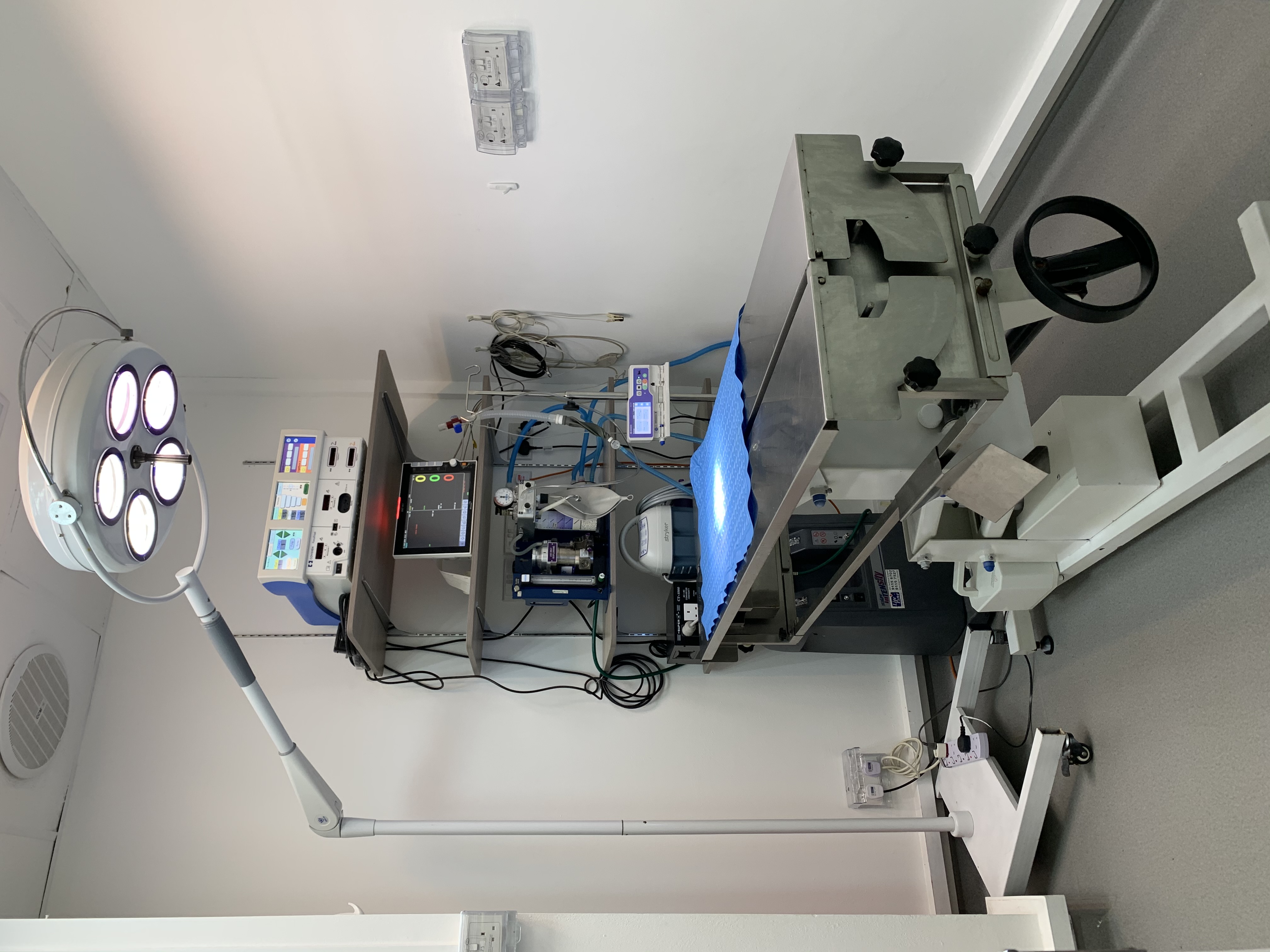
A sterilization is a day procedure, patients need to be fasted the night prior. The surgery is performed under general anesthesia, pre-anesthetic blood tests are performed on the day of surgery to obtain an accurate assessment of internal body function status.
What is the post-operative care for sterilization?
- The sterilization wound takes approximately 10-14 days to heal.
- The surgical site needs to be monitored daily for any abnormal discharge, swelling, redness or wound breakdown.
- Surgical wounds need to be cleaned topically twice daily.
- An Elizabethan collar (“Cone”) must be worn to prevent self-trauma to the surgical wound via licking or chewing.
- Exercise restriction and rest are important to facilitate wound healing. Short, controlled leash walks are recommended. Avoid strenuous activities such as running, jumping or stair climbing
A spay (Ovariohysterectomy) is the surgical removal of the ovaries and uterus in a female.
What are the benefits of Spaying Female Dogs and Cats?
- Reduces the risks of breast cancer (mammary tumors). Evidence has shown that spaying pets before the first heat has an almost 0% chance of developing breast cancer as compared to spaying pets after the first heat (7% chance) or second heat (25% chance). In patients with pre-existing breast cancer, removal of the ovaries helps to slow or stop the disease progression by eliminating the source of the estrogen hormone.
- Prevents the occurrence of pyometra (infection of the uterus).
Castration (Orchiectomy) is the surgical removal of the testicles in a male.
What are the benefits of castrating Male Dogs or Cats?
- Reduces undesirable behaviors such as dominance and territorial aggression, urine spraying and humping.
- Reduces the risks of hormonal related diseases such as prostate disease and perineal hernias.
- Prevents the occurrence of testicular diseases such as testicular cancer, torsion or infection.
Cryptorchid Surgery (undescended testicles) for Male Dogs and Cats
Cryptorchidism (Undescended Testicles) is a male birth defect in which the testicle(s) do not fully descend into the scrotum. The defect may be bilateral with both testicles undescended, or unilateral with only one testicle undescended.
Cryptorchidism is an inherited genetic trait, as such cryptorchid dogs or cats should never be used for breeding. If a testicle has not descended into the scrotum by 6 months of age, your dog or cat is likely a cryptorchid. The undescended testicle will be located either within the abdomen (abdominal cryptorchid) or within the groin (inguinal cryptorchid).
The incidence of testicular cancer and testicular torsion is higher in cryptorchid dogs or cats compared with normal dogs or cats. Castration is recommended for all cryptorchid male dogs or cats.
Please do not hesitate to contact us at 6455 6880 if you have any queries.
Soft Tissue Surgery
Common soft tissue surgeries performed include the following. However, this is by no means an exhaustive list. Please feel free to contact us if you require further information.
You may expand on the following headers for more information on each surgery.
What is a lumpectomy?
A lumpectomy is a procedure used to remove lumps attached to skin surfaces or organ tissues. Prior to a lumpectomy, the mass may be sampled using a needle to determine the nature of the mass and what cells are involved. A lumpectomy will involve removal of the mass along with some healthy tissue surrounding the mass, to ensure the abnormal cells are removed entirely to minimize the risks of spread to other parts of the body.
How is a lumpectomy performed?
Lumps may be found at the skin surface, or internally around organs. Local anesthesia may be used for small lumpectomies performed at the skin surface. If general anesthesia is required, your pet may need to fast for 8-12 hours prior. Water must be provided to prevent dehydration.
For large external masses, general anesthesia will be administered. The site around the mass or the incision site will be clipped and cleaned with an antiseptic to prevent contamination of the surgical wound. If the lump is located internally, an incision will be made, and the organ and the lump isolated. The lump is excised with a scalpel along with surrounding tissue is removed with the lump, to ensure the spread of abnormal cells to healthy tissue does not occur. Blood vessels supplying the mass and tissue being removed is cauterized or tied off to control bleeding. If a large area of tissue is removed, reconstructive techniques may be required to close the gap. Incisions made internally are closed with absorbable sutures, and outer layers of skin closed with staples or non-absorbable sutures.
The lumps and tissue removed will be preserved in formalin and sent for analysis to characterize the cells present, and to ensure healthy margins were obtained. If malignant cells are present, chemotherapy or radiation therapy may be recommended in addition to the lumpectomy. The incision may be covered with a bandage or dressing. If a large area was excised, a drain may be left in place to allow fluid build-up in the area to drain post-surgery.
The entire procedure usually takes anywhere from 15 minutes, for minor lumpectomies on or near the skin surface, to one hour or more, for internal lumps, depending on the location of the lump and amount of tissue and reconstruction required. Hospitalisation will depend on the pet's overall health and any illness they are experiencing from the presence of the lump or other diseases.
What is the lumpectomy Post-operative care?
Following a lumpectomy, your pet may be prescribed pain medication or antibiotics. It is important to ensure your pet does not interfere with the surgical wound and an Elizabethan collar and supervision will be required. If a drain has been placed, this will have to be monitored to ensure the drain does not become blocked or dislodged. The wound should be monitored to ensure rupture or infection does not occur. Sutures or staples will need to be removed in 10 to 14 days. Your pet should be kept quiet and avoid exercise or activity that would strain the incision, such as jumping on furniture or roughhousing with other pets. You may need to confine your pet to a cage or kennel if necessary. Follow up examinations will be necessary to ensure healing has occurred. If chemotherapy or radiation is required, this will usually be initiated once healing of the surgical wound has been achieved.
Are there risks with a lumpectomy?
The risks from lumpectomies are low, especially if only local anesthetic was required. Risks from general anesthesia and bleeding are associated with more invasive lumpectomies. Pre-anesthetic blood work is always performed to examine your pet's systemic health before anesthesia. Postoperative care is important to ensure infection or rupture of surgical wound does not occur.
How do we prevent lumps from progressing significantly?
Early detection of lumps is key to successful treatment and will minimize the invasiveness of required lumpectomies. Regular examination and grooming of your pet facilitate for early detection of lumps. In addition, avoid allowing your pet to be exposed to the sun, by providing shade or using sunscreens formulated for pets when necessary.
What is an aural hematoma?
An aural hematoma is an accumulation of blood and blood clots between the skin and cartilage of the ear flap.
How does an aural hematoma occur?
Aural hematomas occur due to excessive shaking, scratching or trauma to the ears resulting in blood vessels within the ear flap rupturing. The resulting bleeding leads to clots and swelling in the ear flap. The underlying causes are typically ear infections and underlying allergies or irritations to the ears.
How are aural hematomas treated?
Non-surgical option: The pinna is disinfected before a needle or blade is used to puncture the hematoma and evacuate the contents. A bandage is usually applied after to prevent refilling of blood into the empty space. Patients are rechecked every 5-7 days to assess 'flatness' of the ear. 2-3 rounds of bandaging are usually required before the ear is fully flat. The success rate is lower compared to the surgical option.
Surgical option: The surgical procedure can be performed under heavy sedation or general anesthesia depending on the nature of the patient as well as the size and extent of the hematoma. A straight or 'S-shaped' incision is usually made over the hematoma. Sutures and/or stents are placed parallel to the incision in a staggered pattern. This is to close up all the dead space once taken up by the pool of blood. The incision line is not sutured closed. The sutures are removed in 2-3 weeks if all the fluid and drainage have subsided, and if the skin surface appears to tightly adhere to the ear cartilage.
What is a caesarian section?
Cesarean section is an emergency surgery that is indicated for abnormal or difficult births (dystocia). Surgical intervention is needed to save the life of both the mother and offsprings.
How is a caesarian section performed?
Pre-surgical diagnostics such as blood tests and imaging (radiography and ultrasonography) are advisable, to assess the mother's health status and the babies' viability. Intravenous fluid therapy will be commenced prior to surgery to ensure adequate hydration and to correct any electrolyte abnormalities.
The caesarian section will be conducted under general anesthesia. Two teams will be activated for the surgery: one team to perform the surgery, the other to receive and resuscitate the puppies or kittens. The puppies or kittens will be introduced to their mother only after she has completely recovered from anesthesia. Both the mother and her litter will be discharged from the hospital once they are stable enough for home management.
If you do not want a repeat pregnancy or to breed further, it is advisable to sterilize the mother during the caesarian. This will prevent future dystocias, uterine infections and reduce the incidence of breast cancer. The mother will still be able to produce milk even if sterilization is performed, as the hormones prolactin and cortisol will maintain lactation.
Dog breeds that may require caesarian sections
Dystocia can occur in any breed, but some breeds are more predisposed than others. For example, dog breeds with narrow hips (narrow pelvis) and big heads (large skulls), such as brachycephalic breeds. Bull Dogs, Chihuahuas, Pugs, Boston Terriers.
Cat breeds that may require caesarian sections
Siamese, Persian and Maine Coon Cats due to their massive sizes.
How do you tell if dystocia is happening and a caesarian section is needed?
- If the gestation period has passed (63-70 days) and the pregnant mother has yet to go into labor
- Abnormal vaginal discharge is observed with no signs of labor
- If the mother is exhibiting extreme discomfort, exhaustion, weakness and no baby is expelled despite 2-3 hours of labor
- If a baby is observed to be stuck at the birth canal / vaginal opening
Pyometra (Infected Uterus) Surgery
What is Pyometra?
Pyometra is an infection of the uterus. The infection causes pus to accumulate within the uterus.
How does pyometra occur?
Repeated hormonal changes as part of the normal oestrus cycle lead to repeated exposure to progesterone and estrogen. This leads to increased thickening of the uterine lining and the build-up of fluid, all of which increases the chance of infection. During oestrus, the open cervix acts as a passageway for bacteria to move from the vagina to the uterus. If pregnancy does not occur for several oestrus cycles, the repeated hormonal exposure thickens the lining of the uterus and increases fluid secretions, providing the perfect environment for bacteria to thrive in.
Who is at risk of pyometra?
Pyometra can affect any un-desexed female patient. It is generally seen in the older patients, however, younger patients can be affected as well.
What are the clinical signs of pyometra?
Vaginal discharge, lethargy, vomiting, inappetence, abdominal distension, and diarrhea. These signs typically develop 1-2 months after the last oestrus cycle if an animal has just come into recent heat.
How is pyometra diagnosed?
Diagnosis can be based on clinical signs, history as well as findings noted during the physical examination. Ultrasonography is the best diagnostic tool to confirm if the uterine body is distended and filled with abnormal fluid. In certain cases, radiographs may allow visualization of the distended uterine body. Blood tests may also reveal an elevated white blood cell count depending on the stage and severity of the disease.
Is pyometra life threatening?
There are 2 categories of pyometra: open or closed.
When the cervix is closed during the disease process, this is considered a “closed” pyometra. A closed pyometra is more severe and critical. When the cervix is closed, it allows the build-up of pus in the uterus, leading to severe distension of the uterus. A rupture of the uterus due to this distension can be fatal.
In certain cases, the cervix remains open during the disease process. This is considered an "open" pyometra. The opening of the cervix allows the pus to drain out of the uterus, reducing the build-up and rapid manifestation of the disease.
Pyometra is a life-threatening disease and requires immediate medical attention. The infection in the uterus can spread to the rest of the body and affect other organs, causing kidney failure and liver damage. A rupture of the infected uterus can be fatal due to the severity of an infected abdomen (peritonitis).
How is pyometra treated?
Surgery is the recommended treatment. An ovariohysterectomy is performed on the affected patient. This involves removal of the entire infected uterus, eliminating the source of infection. Follow up medications including antibiotics will be required to treat any residue infection. Supportive care may be necessary if organ function has also been affected.
Inbreeding animals or cases where surgery is not an option, a medical approach is available. Prostaglandins, a group of hormones are usually given in these cases. They reduce the level of progesterone, hereby relaxing and opening the cervix to expel bacteria and pus. However, this method has limited success.
How can pyometra be prevented?
Sterilisation of female patients will prevent the condition from happening. If you do not intend on breeding, please do consider sterilization for your pet's benefit. Prevention is better than cure.
Click here to read more on pyometra.
What is a cystotomy?
A cystotomy refers to the surgical procedure to enter the bladder.
Cystotomies are typically performed to remove abnormal material within bladders (bladder stones, cancerous tissues, inflammatory tissues, foreign bodies etc).
Click here to read more on bladder stones.
Please do not hesitate to contact us at 6455 6880 if you have any queries.
More content coming soon
Please do not hesitate to contact us at 6455 6880 if you have any queries.
Dental Care
Dental health is a crucial component of your pet’s overall well-being. Poor dental health is not just a matter of having bad breath. Diseased teeth and inflamed gums can all lead to severe consequences in which can compromise your pet’s quality of life.
United Veterinary Clinic is fully equipped with veterinary dental equipment to meet your pet’s dental needs.
Dental Scaling and Polishing
Dental scaling and polishing can improve your pet’s overall well-being and is advised for all pets. Dental health is a vital component that should not be overlooked in caring for our furry mates.
Dental Extractions
Dental extractions are performed on decayed or fractured teeth that cannot be treated medically. Tooth extractions are also indicated for deciduous teeth (retained teeth), to avoid overcrowding and displacement of teeth growth.
How is a dental extraction performed?
While under general anesthesia, various instruments are used to extract a diseased tooth. Elevators are needed to manipulate and loosen teeth within their respective tooth sockets. Dental burs may be needed to cut bone and teeth. Dental X-rays may be required to assess the integrity of the bone prior to dental extractions
Please do not hesitate to contact us at 6455 6880 if you have any queries.



